
Article
9 Feedbird Alternatives for Scalable Creator Marketing Campaigns
Discover 9 powerful Feedbird alternatives from Content Rewards to scale your creator marketing campaigns and boost ROI with proven platforms.
Creator marketing has become a powerful way for brands to reach authentic audiences while offering content creators genuine income opportunities. Finding the right platform to scale influencer campaigns can feel overwhelming, especially when current tools don't meet specific needs. Whether managing micro influencer partnerships or seeking better campaign management tools, understanding alternatives to existing platforms matters for sustainable growth.
The right platform makes the difference between scattered efforts and systematic growth. Instead of juggling multiple systems or struggling with tools that don't fit, brands need streamlined solutions for campaign tracking, payment processing, and performance analytics. Content Rewards provides exactly this through their comprehensive influencer marketing platform.
Table of Contents
- Why Many Brands Outgrow Feedbird
- What to Look for in a Feedbird Alternative
- 9 Best Feedbird Alternatives for Different Use Cases
- Why Most Feedbird Alternatives Still Focus on Content Production
- The Hidden Cost of Content Without Distribution
- How Content Rewards Go Beyond Traditional Feedbird Alternatives
- Scale your Business with Influencer Marketing with Ease Today
Summary
- Content production tools solve the wrong problem for most brands that have already established consistent publishing workflows. The real bottleneck isn't creating more posts, it's reaching audiences beyond existing followers. Organic reach on major platforms dropped to an average of 2.2% of total followers in 2023, down from 5.5% in 2020, according to Hootsuite's Social Media Trends Report. Publishing frequency can't overcome algorithmic suppression when only a tiny fraction of your audience sees each post.
- Performance-based creator compensation reduces the financial risk that prevents brands from scaling influencer programs. Traditional partnerships require upfront payments regardless of results, creating budget exposure that makes marketing leaders hesitant to expand creator networks. Models that tie creator earnings to verified views and engagement align spending with outcomes rather than assumptions, shifting from fixed costs to variable spend that scales with actual performance.
- Creator networks provide distribution channels that owned accounts can't replicate. A single creator posting about a brand reaches communities that would otherwise never see the company's content, not because of quality differences but because of access to audiences beyond its existing reach. This distribution advantage becomes operationally viable only when platforms reduce the coordination friction that typically caps the number of creator relationships a small team can manage simultaneously.
- Content marketing generates 3 times as many leads as traditional outbound marketing and costs 62% less, according to HubSpot research, but only when people actually see it. Brands spending $60,000 annually on content that reaches only existing followers with declining engagement face compounding opportunity costs. Every piece of excellent content that fails to expand reach represents not just wasted effort but missed momentum that could have grown over time.
- Multi-platform creator campaigns traditionally require managing separate relationships, tracking performance through different dashboards, and coordinating payments across fragmented systems. The administrative complexity creates a ceiling: expanding from five creators to fifty requires proportional increases in coordination time and headcount, making scale operationally impractical for lean marketing teams without dedicated influencer management resources.
- Content Rewards' influencer marketing platform addresses distribution bottlenecks by connecting brands to 300,000+ creators across TikTok, Instagram, YouTube, and X through centralized campaign management that handles discovery, performance tracking, and automated payouts tied to verified results.
Why Many Brands Outgrow Feedbird
Brands outgrow Feedbird when they realize their problem isn't creating more content—it's getting enough people to see it. Publishing consistently matters, but if your posts never reach beyond existing followers, growth stalls regardless of how polished your content calendar is.
🎯 Key Point: The shift from content creation to content amplification marks the moment when brands need more than just scheduling tools—they need reach strategies.
"Growth stalls regardless of how polished your content calendar looks when posts fail to reach beyond existing followers."

⚠️ Warning: Many brands mistake consistent posting for effective marketing, but without proper audience expansion, even the best content becomes an echo chamber that limits scalable growth.
What problems does Feedbird initially solve for brands?
Many companies start with Content Rewards because they need help producing content at scale. Automated posting, AI-generated captions, and streamlined scheduling address critical pain points for stretched teams. Our platform delivers a steady flow of content across social channels without burning out marketing teams.
Why does growth eventually plateau with content automation?
But after a few months of publishing regularly, engagement plateaus. Follower counts grow slowly, campaign performance feels predictable, and visibility remains limited to your existing audience.
Why do content production tools miss the real challenge?
Content production tools assume your biggest obstacle is volume: create enough posts, and results will follow. This logic breaks down when platform algorithms decide who sees your content, and organic reach continues declining across major social networks.
How does declining organic reach affect your content strategy?
According to Sprout Social, marketers report declining organic reach, making it harder for brand-owned content to reach audiences without additional distribution strategies. Your posts may be excellent, but if they're visible to only 3% of your followers, publishing frequency won't solve the problem.
This creates a ceiling that content creation alone cannot break through. The bottleneck shifts from "we need more content" to "we need more eyes on our content."
What are the limits of relying on your own channels?
Relying entirely on brand-owned accounts has natural limits. Your followers represent a finite audience, and publishing more frequently generates diminishing returns, particularly as algorithms prioritize personal accounts and creator content over branded posts.
How do creators expand your distribution network?
Creators and their audiences provide distribution networks you cannot build on your own. A single creator posting about your brand reaches people who would never see your company account, giving you access to communities beyond your existing reach.
Platforms like Content Rewards connect brands to creators who already have audiences, trust, and algorithmic advantage. Creators post user-generated content that feels genuine, and brands pay based on performance metrics rather than follower counts. This approach prioritizes distribution and measurable reach over content volume.
What metrics should you focus on instead of output
Content calendars measure output: posts published, captions written, graphics designed. But these metrics don't answer what determines success: how many people engaged with your brand who wouldn't have otherwise?
Performance becomes harder to evaluate when the focus is on publishing rather than distribution. You know you posted 20 times this month, but you don't know which content drove awareness, which creators amplified your message, or which channels moved the needle. Growth requires visibility into outcomes, not activity logs.
How does focusing on reach change your strategy
When brands prioritize measurable reach over scheduling tools, the conversation shifts. The question moves from "how do we create enough content?" to "how do we get our content in front of people who don't already follow us?" This typically pushes companies toward alternatives built around creator networks and performance-based distribution instead of content production workflows.
Related Reading
- How to Make Money Online
- Influencer Marketing
- How to Make Money on TikTok
- Influencer Marketing Services
- Does Instagram Notify When You Screenshot a Story
- How to Hide Likes on Instagram
- How to Get More Views on TikTok
- Make Money Online Fast
- TikTok Shop Affiliate Program
- YouTube Shorts Monetization
What to Look for in a Feedbird Alternative
The right choice depends on what happens after you publish. If your content reaches 500 people who already follow you, that's a publishing tool. If it reaches 50,000 people who've never heard of your brand, that's a growth platform. This difference matters more than features, integrations, or interface design.

🎯 Key Point: The fundamental distinction between tools isn't their features—it's their distribution power. A platform that can amplify your reach to new audiences will always outperform one that simply helps you communicate with existing followers.
"The difference between reaching 500 existing followers versus 50,000 new prospects isn't just scale—it's the difference between maintenance and exponential growth."

⚠️ Warning: Don't get distracted by shiny features or complex integrations when evaluating alternatives. The most important metric is whether the platform can consistently deliver your content to audiences beyond your current reach.
Content Quality Matters, But Only If Someone Sees It
Quality content that reflects your brand voice is foundational; weak content rarely spreads regardless of distribution. The real question is whether your platform helps you create content worth amplifying or simply generates more posts. Most brands produce enough content but lack pieces designed to reach beyond their existing audience.
Distribution Determines Growth Velocity
Publishing to owned channels reaches only existing followers. According to Hootsuite's 2023 Social Media Trends Report, organic reach on major platforms dropped to 2.2% of total followers, down from 5.5% in 2020. If only 2% of followers see your content, growth stalls regardless of quality. Choose platforms based on their ability to reach new audiences.
How do creator networks unlock new audiences?
Creators give you access to communities you haven't built yet. A single creator with an engaged audience can generate more qualified attention in one post than a month of company content.
What operational challenges prevent brands from scaling creator campaigns?
The challenge is practical: finding creators, negotiating terms, managing contracts, tracking performance, and ensuring payment creates friction that prevents most brands from scaling creator campaigns. The right platform reduces that friction, so activating ten creators requires roughly the same effort as activating two.
Platforms like influencer marketing platform connect brands to creator networks through performance-based models, where creators earn based on measurable results rather than upfront fees. Our Content Rewards platform aligns incentives around outcomes, enabling you to test multiple creators simultaneously without committing large budgets before seeing results.
Performance Tracking Separates Activity from Outcomes
You can measure how many posts went live, but that doesn't tell you whether those posts brought in traffic, engagement, or revenue. Performance accountability means connecting content to business results. Views, clicks, conversions, and cost per result should be visible at the campaign level, not buried in platform analytics requiring manual reporting. If you can't see what's working within 48 hours of launch, you're managing campaigns blind.
The best alternatives show what's possible when reach replaces repetition as the primary growth lever.
9 Best Feedbird Alternatives for Different Use Cases
The right choice depends on whether you need help creating content, scheduling it, or getting more people to see it. Most tools solve the first two problems; few solve the third.
🎯 Key Point: While many social media tools excel at content creation and scheduling, finding platforms that genuinely boost your content's reach and engagement is the real challenge for most businesses.
"Very few social media management tools actually solve the visibility problem that matters most to growing businesses." — Social Media Marketing Insights, 2024
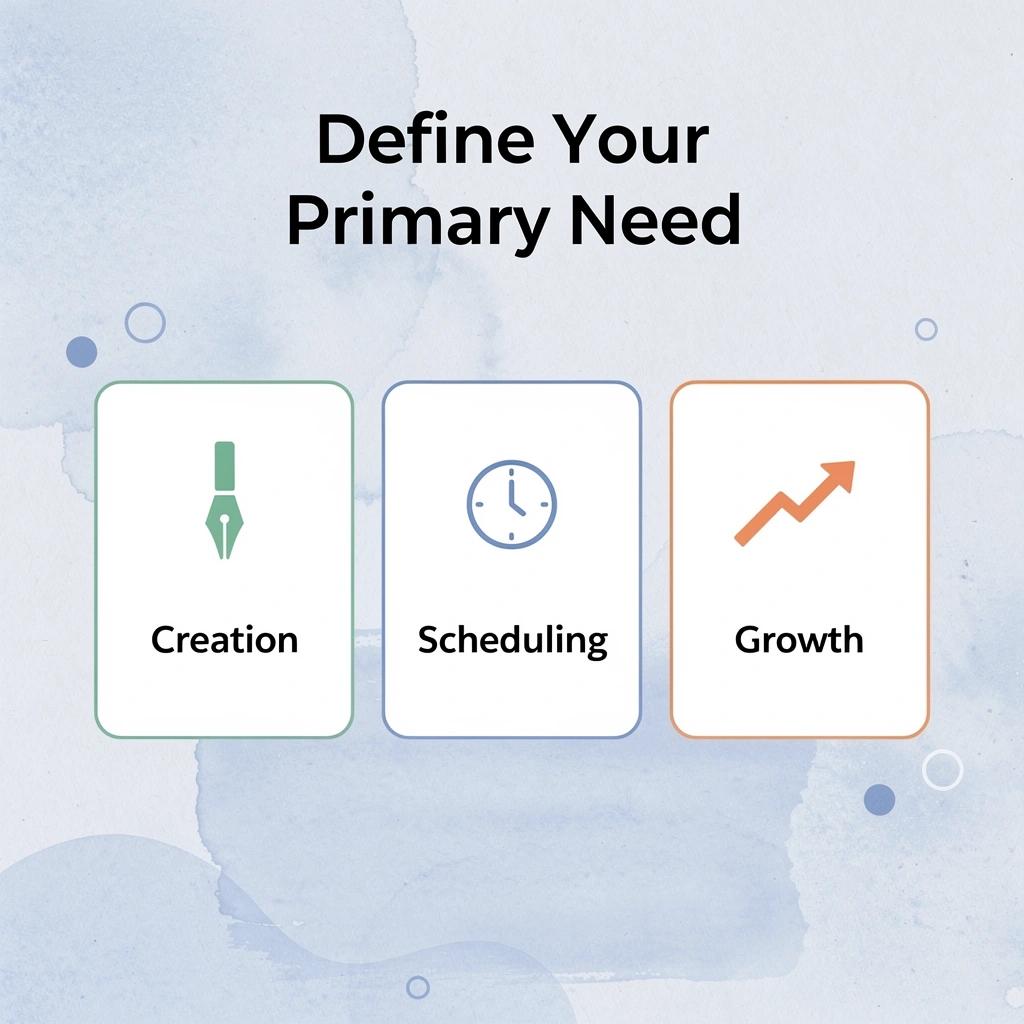
💡 Tip: Before choosing any Feedbird alternative, clearly define whether your primary need is content creation, scheduling automation, or audience growth - this will help you avoid paying for features you don't actually need.
1. Content Rewards: Best for Performance-Based Creator Marketing
Most Feedbird alternatives help you make and schedule content more efficiently. Content Rewards solves a different problem: getting that content in front of people who don't already follow you.
How does performance-based creator marketing work?
The platform lets brands launch creator campaigns with pay-per-performance pricing based on views and engagement rather than flat fees or follower counts. Marketing teams can run campaigns across TikTok, Instagram, YouTube, and X while accessing a network of more than 300,000 creators from a single dashboard that tracks results in real time.
The model works especially well for brands that have mastered content creation but struggle with visibility. Instead of manually finding influencers, negotiating rates, and tracking deliverables across email threads, you start a campaign, set performance benchmarks, and let creators compete for results. The platform handles discovery, contract terms, content approval workflows, and payment processing based on verified performance metrics.
What are the benefits of performance-based budget allocation?
Performance-based models link spending to results rather than to fixed costs, changing how budgets are allocated. You pay more when campaigns perform well and less when they don't.
Content Rewards works best for online stores, consumer product companies, startups, and marketing teams seeking to grow their creator marketing through organic channels without hiring additional staff or negotiating individual influencer deals.
2. Buffer: Best for Social Media Scheduling
Buffer built its reputation on simplicity and ease of use. It helps brands plan, schedule, and publish content across multiple social networks without extensive training. Its interface streamlines core tasks: connecting accounts, queuing posts, setting publishing times, and monitoring engagement metrics. For small businesses and lean marketing teams seeking to publish content regularly without significant overhead, Buffer simplifies the publishing process.
Buffer is best for brands focused on content planning, scheduling, and maintaining a regular posting schedule across their owned channels.
3. Hootsuite: Best for All-in-One Social Media Management
Hootsuite brings together publishing, monitoring, reporting, analytics, and team collaboration on a single platform. It lets you schedule content, listen to social conversations, track customer engagement with your brand, and report on performance. Teams can assign tasks, approve content, and coordinate responses without leaving the platform.
The platform works best for larger organizations managing multiple brands and social channels that require centralized team coordination. Its comprehensive approach reduces tool proliferation but adds complexity compared to simpler scheduling platforms.
4. Ocoya: Best for Content Repurposing
Ocoya combines AI-powered content generation with social media scheduling and content repurposing, helping marketers produce and distribute content more efficiently while reducing manual work.
You can generate captions, repurpose blog posts into social content, create graphics, and schedule posts across platforms. AI assistance accelerates content production, particularly for teams managing high volumes or working with limited creative resources.
5. Upfluence Best for Influencer Discovery
Upfluence helps brands find, evaluate, and manage influencers for marketing campaigns through influencer search, campaign management, outreach workflows, and performance tracking.
The search tool filters creators by audience demographics, engagement rates, content categories, and platform presence. Once you identify potential partners, the platform manages outreach, negotiates terms, tracks deliverables, and measures campaign performance, giving brands greater control and visibility into their creator relationships rather than relying on agencies or manual processes.
Upfluence is best for companies building dedicated influencer marketing programs that need visibility into creator relationships and campaign ROI.
6. GRIN: Best for Creator Marketplace Access
GRIN helps brands build and manage direct relationships with creators at scale, focusing on long-term partnerships rather than one-time campaigns.
The platform handles influencer outreach, project collaboration, product distribution to creators, campaign reporting, contracts, content rights, payments, and performance analysis for multiple creator partnerships from a single platform.
GRIN works best for brands that invest heavily in creator marketing and want to maintain long-term relationships with influencers beyond single campaigns.
7. Vidyo.ai: Best for Short-Form Video Creation
Vidyo.ai converts long-form content (webinars, podcasts, interviews, videos) into short-form clips for TikTok, Instagram Reels, YouTube Shorts, and other platforms, saving time on content repurposing.
The AI identifies the best moments, adds captions, and formats content for vertical video, pulling multiple social clips into a single piece of content without manual editing.
Vidyo.ai works best for businesses that want to focus on video and maximize value from their existing long-form content.
8. Billo Best for User-Generated Content Campaigns
Billo connects brands with creators who specialize in producing user-generated content for advertising and social media campaigns, focusing on production over influencer reach.
Brands submit creative briefs, creators produce videos matching specifications, and companies receive authentic creator-style content for marketing channels. This content often performs better than polished brand content in paid advertising because it matches native social platform styles. You're buying the creative asset, not the creator's audience.
Billo is best for companies scaling UGC creative production for paid and organic campaigns without managing individual creator relationships or negotiating usage rights separately.
9. Sprout Social Best for Social Analytics and Reporting
Sprout Social offers analytics, reporting, publishing, engagement management, and customer communication tools. Its reporting features provide deeper insight into social media performance, audience behavior, and campaign effectiveness.
The platform aggregates data from social channels, tracks sentiment, monitors brand mentions, and connects social activity to business results. For teams needing to demonstrate social media ROI or refine strategy based on performance, Sprout Social provides visibility that simpler scheduling tools lack.
Sprout Social is best for data-driven marketing teams seeking strong reporting and performance measurement across social channels.
Which Feedbird Alternative Is Right for You?
The answer depends on the problem you're trying to solve. Buffer and Hootsuite excel at scheduling content. Upfluence and GRIN offer influencer discovery. Ocoya, Vidyo.ai, and Billo focus on content production.
How do performance-based platforms change creator partnerships?
Most brands manage creator partnerships through flat-fee agreements negotiated individually. As campaigns scale, this approach creates friction: finding creators takes weeks, negotiations drag through email exchanges, tracking deliverables requires manual follow-up, and payment processing occurs outside the platform.
Platforms like Content Rewards consolidate performance-based creator campaigns with automated discovery, standardized terms, real-time tracking, and payment processing tied to verified results, compressing campaign launch from weeks to days while aligning creator compensation with actual outcomes.
What if your challenge is scaling engagement rather than content creation?
If your challenge is scaling engagement rather than creating content, Content Rewards offers a different approach. Our influencer marketing platform helps brands grow creator-driven distribution and pay for measurable performance, addressing a major growth bottleneck many brands face once content production is working.
But most alternatives still optimize for the wrong metric, revealing something important about how social media marketing has changed.
Why Most Feedbird Alternatives Still Focus on Content Production
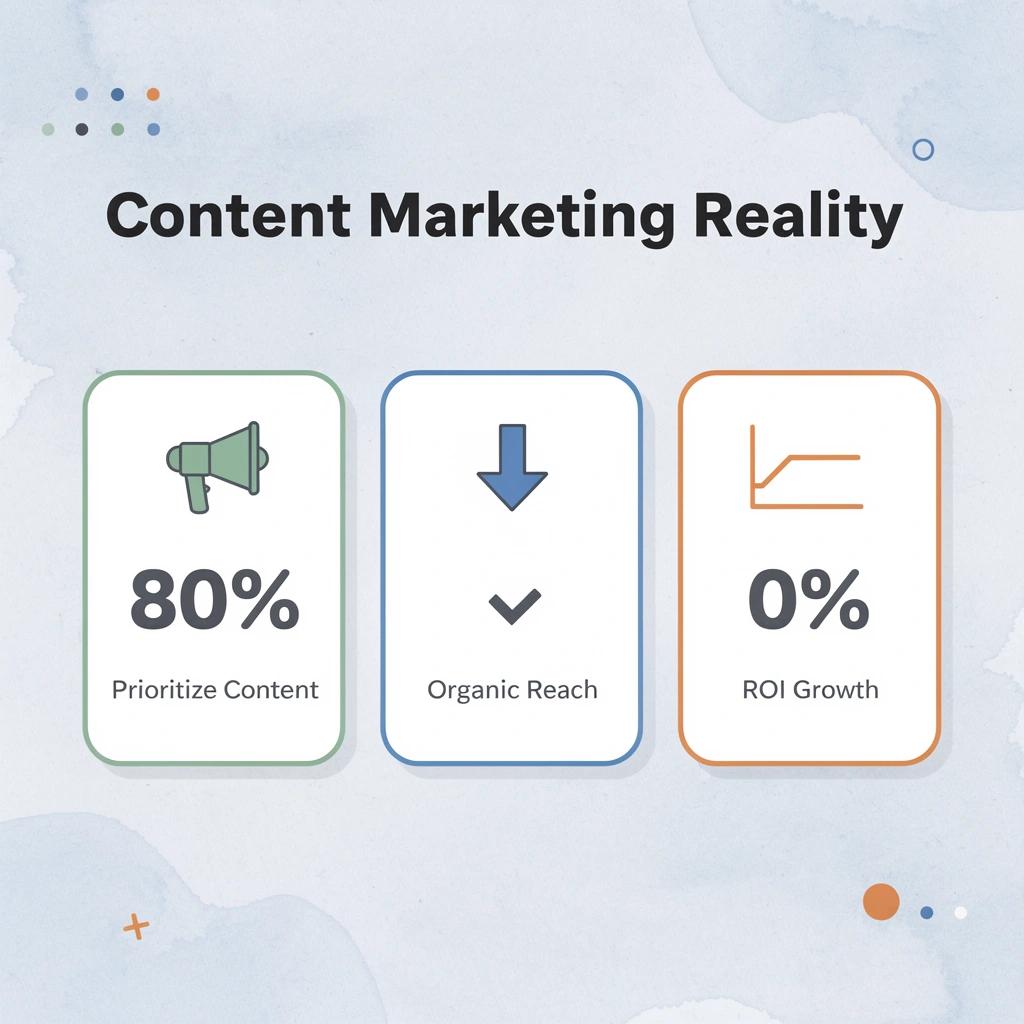
Most platforms assume that making more content leads to better results. While content creation is the top priority for 80% of marketers, this thinking breaks down when organic reach shrinks, and more posts don't translate to visibility.

🎯 Key Point: The traditional content-first approach is fundamentally flawed when organic reach continues to decline across all major platforms.
"Content creation is the top priority for 80% of marketers, yet organic reach continues to shrink across platforms." — HubSpot Marketing Statistics, 2024
⚠️ Warning: Simply producing more content without focusing on strategic distribution and audience engagement leads to diminishing returns and wasted resources.
The Supply Side Trap
Content management platforms help teams create faster, schedule smarter, and organize better by solving production bottlenecks. But once you've solved that problem, you face a different challenge: a content library that nobody sees. Efficient workflows don't matter if your audience stays the same size. The problem shifts from production to distribution.
Why Distribution Gets Ignored
Distribution is harder to package into software. Scheduling a post at 3 PM is straightforward. Getting that post in front of 50,000 new people requires relationships, networks, and influence that most platforms don't control. So they focus on what they can automate: the publishing process. The result is tools that make it easier to talk but don't help anyone listen.
How do performance-based models solve reach problems
When brands realize their content isn't reaching new audiences, performance-based models like Content Rewards become essential. Our platform connects brands with creators who share content within their own communities and earn based on real views and engagement, replacing dependence on owned channels with earned reach through creator networks.
The Metric That Reveals the Gap
A brand publishes 20 posts per week instead of three. Six months later, follower growth remains flat. Engagement per post hasn't changed. Reach stays limited to the same small percentage of existing followers. The content improved, but the audience didn't grow.
That's when teams realize they've been optimizing for the wrong outcome. Content marketing generates 3 times as many leads as traditional outbound marketing and costs 62% less, but only when people see it. Production without distribution is effort without impact.
Why is producing more content expensive beyond the obvious costs?
Making more content isn't inefficient when reach is the problem; it's expensive in ways that don't show up on the content calendar.
Related Reading
The Hidden Cost of Content Without Distribution
The real cost isn't the hours spent writing captions or editing videos. It's the opportunity cost of every piece of content that never reaches anyone new. Publishing ten posts per week that all reach the same 2% of existing followers isn't building a marketing engine: it's running a treadmill.
🔑 Key Takeaway: Without proper distribution, high-quality content becomes a drain on resources rather than a growth driver.
"Publishing ten posts per week that all reach the same 2% of existing followers isn't building a marketing engine: it's running a treadmill." — Content Distribution Reality Check
⚠️ Warning: Most businesses mistake content creation for content marketing, missing the critical distribution component that turns posts into a pipeline.

The Infrastructure Cost of Invisible Content
Most teams track production expenses closely but rarely calculate the cost of content that generates no measurable growth. According to Wolters Kluwer's analysis of fragmented technological solutions, unoptimized systems accumulate inefficiencies that cost significantly more than initial setup over 410 days. Every post that fails to reach new audiences represents production spending without corresponding gains in visibility.
A company spending $5,000 monthly on content creation that reaches only existing followers, with declining engagement, wastes $60,000 annually on marketing that doesn't grow its audience. The gap between effort and outcome is where budgets disappear.
Why does production scale differently from distribution?
Making more content follows a predictable cost curve: hire another writer, add a designer, invest in better tools, and output increases proportionally. Distribution doesn't work that way. Doubling content volume doesn't double reach when algorithms control visibility.
How can saturation work against your content strategy?
Saturation can work against you: platforms may deprioritize accounts that post too frequently, and audiences tire of brands that appear repeatedly without offering new value.
The brands gaining momentum aren't creating more content—they're placing it in front of audiences they don't already own. Teams managing creator partnerships through influencer marketing platform shift from optimizing production schedules to optimizing audience access, paying creators based on actual views rather than flat fees for content that may never reach anyone.
What happens when content reaches the same small audience repeatedly?
When content reaches the same small group of followers month after month, growth stalls. New followers arrive slowly, and engagement declines as audiences encounter repetitive messages. Brands spend more money improving their content, but the real problem lies in distribution, not quality.
According to research from Georgia Tech's Energy Policy and Innovation Center, systems that process 200,000 tokens repeatedly without optimization incur hidden costs that accumulate until they become structural constraints. Content strategies face similar dynamics: each piece of excellent content that reaches only minimal new audiences represents wasted effort and missed momentum that could have compounded over time.
How should teams shift their content strategy focus?
Teams that recognize this shift from "How do we create better content?" to "How do we get our content in front of people who don't already follow us?" ask a different question, one that changes how resources get used. Making content becomes less important than getting people to see it. You can't fix an audience problem with better graphics alone.
Understanding the cost is only half the answer. The harder question is what works when the old ways of sharing content no longer work.
How Content Rewards Go Beyond Traditional Feedbird Alternatives
Most platforms help brands create content more efficiently. Content Rewards solves what happens after—amplifying content beyond existing followers. While Salesgenie reports that content marketing costs 62% less than traditional marketing and generates 3 times as many leads, many brands still struggle to reach new audiences. The problem isn't creating the content; it's getting content in front of people who don't know you exist.

🔑 Key Takeaway: The real challenge isn't content creation—it's expanding your audience beyond your existing follower base.
"Content marketing costs 62% less than traditional marketing and generates 3 times as many leads." — Salesgenie, 2024

💡 Strategic Insight: While traditional Feedbird alternatives focus on content scheduling and creation efficiency, Content Rewards addresses the critical gap of audience discovery and reach amplification.
Performance-Based Campaigns Reduce Upfront Risk
Traditional influencer partnerships require upfront payment regardless of performance. Content Rewards ties compensation to actual views and engagement instead. Creators earn based on measurable outcomes, aligning brand spending with results rather than assumptions. This reduces the financial risk that deters many marketing leaders from expanding creator programs.
Multi-Platform Reach Without Fragmented Management
Audiences are spread across TikTok, Instagram, YouTube, and X. Reaching them through traditional channels means managing separate creator relationships on each platform, tracking performance across different analytics dashboards, and coordinating payments across multiple systems. Content Rewards centralizes this process: brands activate creators across all four platforms through a single interface, monitor campaign performance in a unified view, and manage payments without spreadsheets. This operational simplification removes the administrative friction that limits the number of creators a team can manage.
Scale Without Proportional Resource Increase
Going from five creators to fifty significantly increases workload across outreach, contracts, performance tracking, and invoicing. Most teams reach a point where adding creators requires hiring additional staff. Our influencer marketing platform helps brands work with more creators without proportional hiring by automating discovery, campaign activation, and performance measurement, enabling small teams to manage networks that would otherwise require multiple full-time coordinators.
Measurable Accountability Changes Budget Conversations
Marketing leaders struggle to justify creator spending when ROI remains unclear. Performance-based models shift focus from debating whether a creator's style fits to verifying whether views and engagement justify costs, grounding budget decisions in data rather than instinct. Research from Salesgenie shows 70% of marketers actively invest in content marketing, yet many lack clear frameworks for measuring creator campaign effectiveness beyond vanity metrics.
The real question is whether your growth problem is a distribution problem disguised as a content problem. Recognizing this distinction clarifies the path forward, though executing at scale remains challenging.
Related Reading
- Pearpop
- Whop Clipping
- Clipster
- Trend.io
- Creator.co
- Influee
- Vyro
- Join Brands
- Popular Pays
Scale your Business with Influencer Marketing with Ease Today
Running campaigns at scale becomes easier when the infrastructure handles discovery, negotiation, tracking, and payment. Instead of checking individual creators manually, you focus on campaign strategy while the platform manages operational logistics.

🎯 Key Point: Streamlined infrastructure eliminates manual creator management, letting you focus on strategy instead of operations.
Content Rewards connects brands to 300,000+ creators across TikTok, Instagram, YouTube, and X through a single interface. Brands set campaign parameters, and creators apply based on performance incentives. The platform tracks views and engagement in real time, automatically calculating payouts tied to actual results rather than upfront fees. This shifts financial risk from brands to creators while offering transparent earning potential.
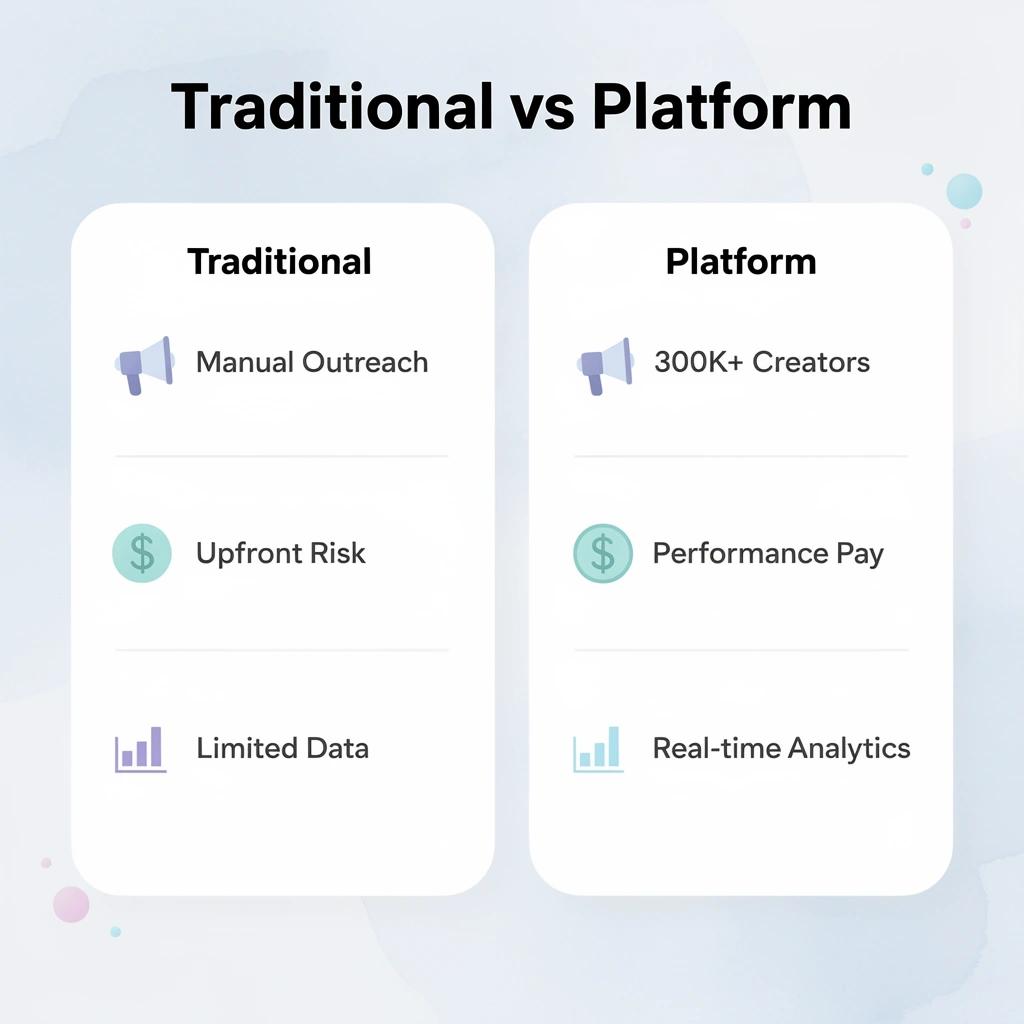
Traditional Approach
- Manual creator outreach
- Upfront payment risk
- Limited tracking
- Individual negotiations
Content Rewards Platform
- 300,000+ creators in one interface
- Performance-based payouts
- Real-time analytics
- Automated campaign management
"Performance data shows which creator partnerships deliver measurable audience growth, not just engagement from existing followers."
Your first campaign reveals whether distribution was the missing piece. Most brands see within 48 hours if creator networks amplify reach beyond organic posting or paid ads. Performance data shows which creator partnerships deliver measurable audience growth, not engagement from existing followers.
💡 Tip: Monitor your first campaign's 48-hour performance metrics to identify which creator partnerships drive genuine audience expansion versus surface-level engagement.
You need both content creation and distribution, but solving distribution unlocks the value of everything you've already built. When content reaches new audiences consistently, visibility becomes your growth engine instead of your bottleneck.